International
Thailand's Illegal Land Grab: Electricity Plan Pushed at Ta Krabey Temple
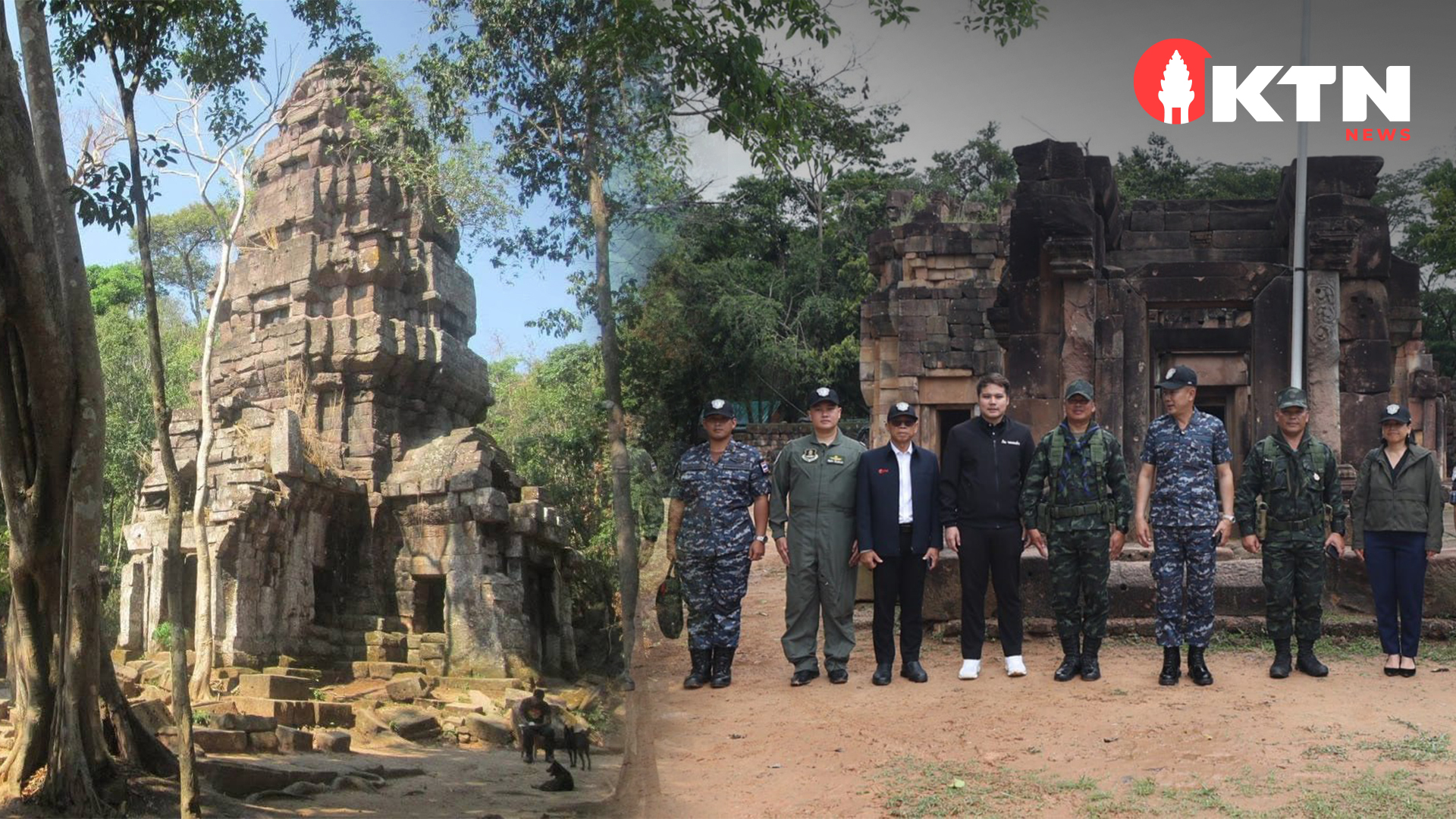
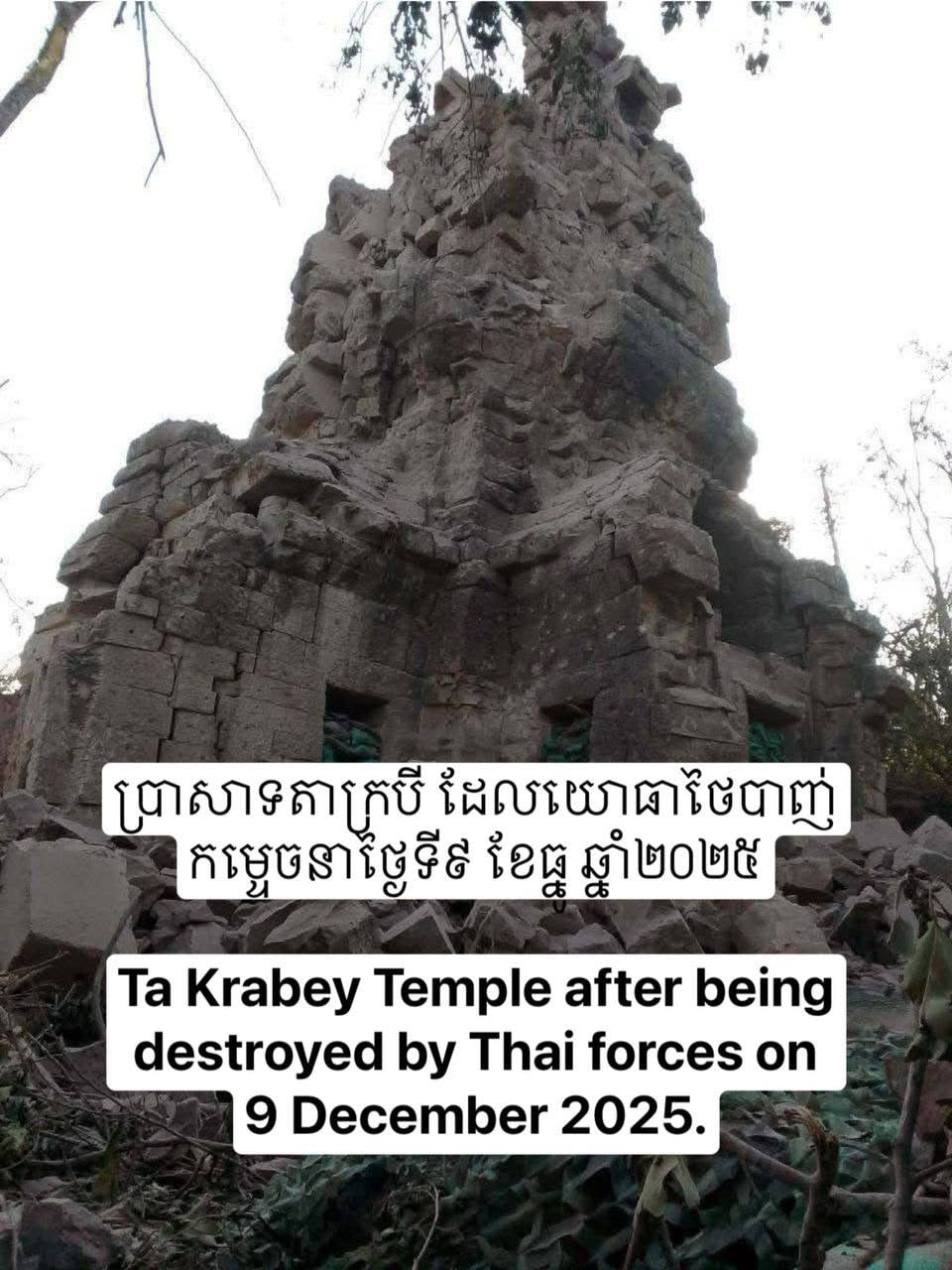
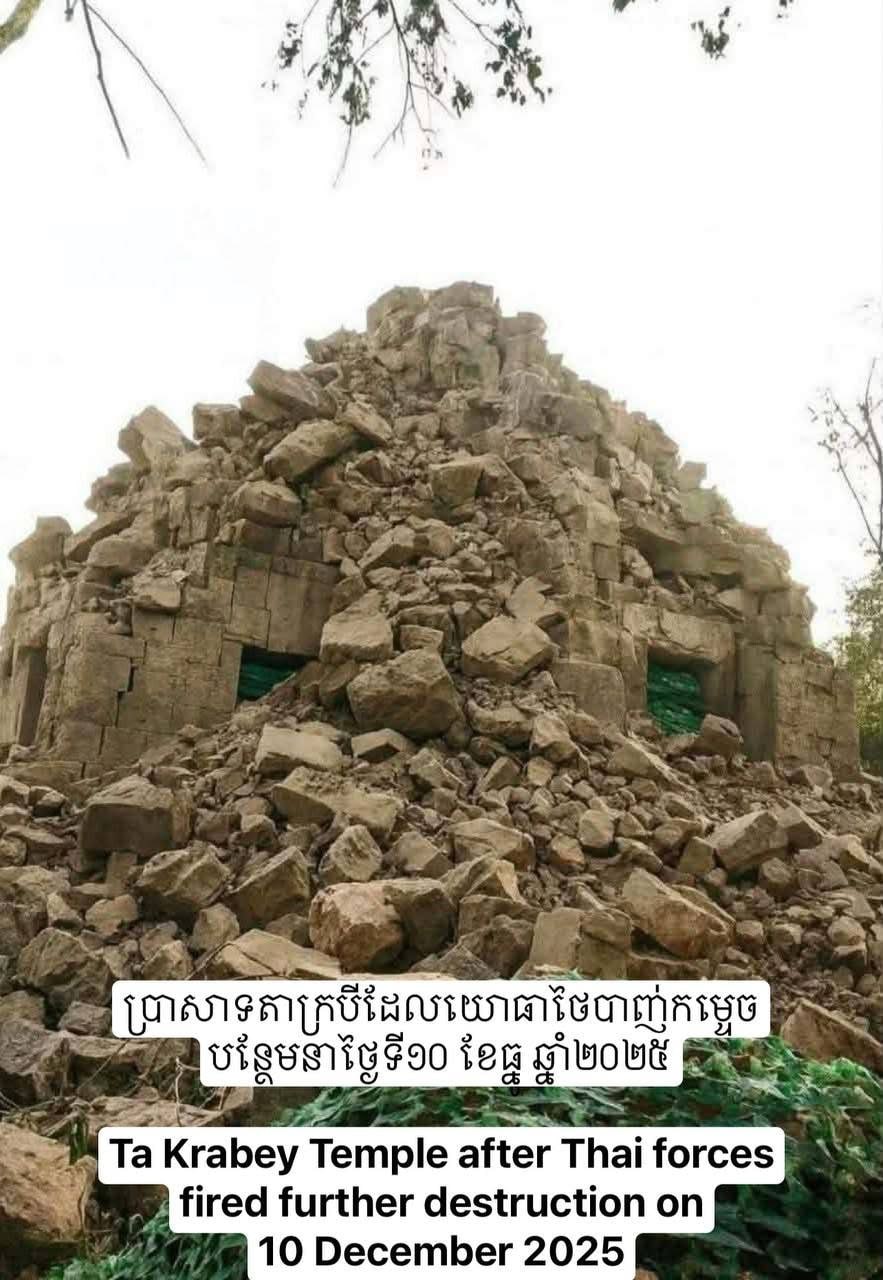
PHNOM PENH, August 20, 2026 – Thailand's announcement of plans to extend electricity infrastructure to the Ta Krabey Temple-Hill 333 border area has been condemned by Cambodian officials and observers as a unilateral act that entrenches Thai military control over disputed territory, furthering what they describe as an illegal land grab from Cambodia in clear violation of international law.
The Royal Government of Cambodia has formally lodged a strong protest against Thailand's continued violations of Cambodian sovereignty and territorial integrity along the border. According to a press release from the Ministry of Foreign Affairs and International Cooperation on August 10, Thai armed forces continued to construct new military bunkers on Cambodian territory in the area of the Thmor Da International Border Checkpoint, Pursat Province, on August 6. The following day, Thailand announced its plan to extend its national power grid to Ta Krabey Temple and Hill 333.
"These activities amount to an attempt to consolidate Thailand's unlawful occupation of Cambodian territory, in violation of Thailand's obligations under existing bilateral treaties and agreements on the demarcation of the land boundary with Cambodia," the ministry stated.
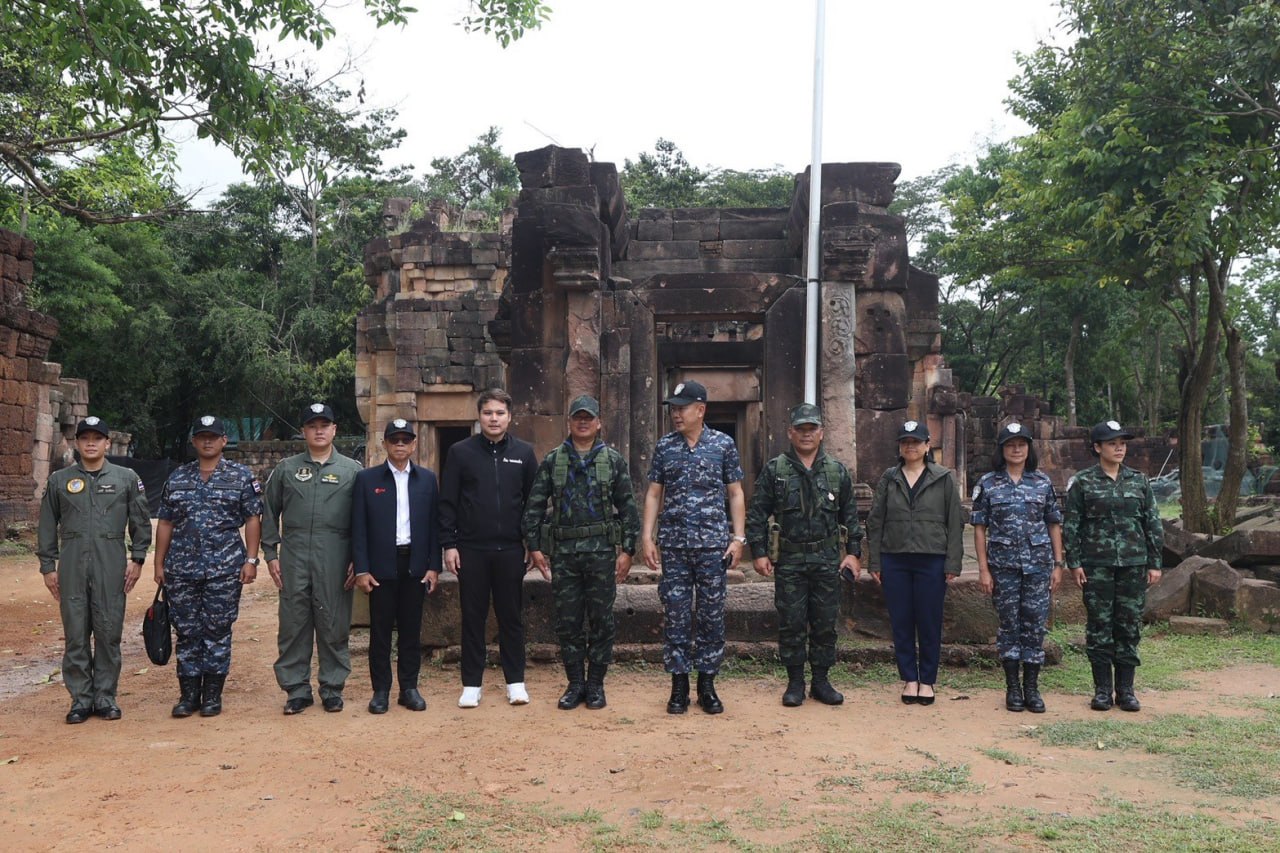
Air Force Assistant Commander-in-Chief ACM Prapas Sonchaidee, director of the Joint Information Center (JIC) for the Thai-Cambodian situation, visited the area on August 20, describing the electricity project as an important part of national security. "Security does not mean military power alone. Effective infrastructure is also part of security," he told Khaosod English.
He also reiterated that "Thailand wants peace" and does not want the situation to escalate. Yet for Cambodia, these words ring hollow. Thailand repeatedly speaks of peace while simultaneously deepening its military footprint on disputed land—building bunkers, installing containers, laying barbed wire, and now pushing power lines. These are not acts of peace; they are acts of occupation.

Border Meetings Postponed, Infrastructure Pushed Forward
While Thailand advances infrastructure on disputed ground, it has repeatedly postponed formal border meetings. Cambodia has proposed multiple dates for special Joint Boundary Commission (JBC) meetings in Siem Reap, only to have them postponed by Thailand, which cited the need to complete internal procedures following its new Cabinet formation. Cambodia has also requested the resumption of joint technical fieldwork—including the deployment of Joint Survey Teams to replace boundary pillars and install temporary markers—but these requests have yet to receive official Thai responses.
Foreign Minister Prak Sokhonn has repeatedly called for the full implementation of the December 27, 2025 Joint Statement and the resumption of survey and demarcation work. Cambodia has also pushed for compulsory conciliation under the United Nations Convention on the Law of the Sea (UNCLOS) to settle overlapping maritime claims. But Thailand's actions on the ground speak louder than its words.
A Pattern of Unilateral Action in Violation of International Law
The electricity plan follows a long list of Thai provocations: airstrikes on civilian areas, including a health centre in Preah Vihear; the destruction of homes and infrastructure in border villages; and the ongoing occupation of Cambodian territory, leaving tens of thousands of civilians displaced. Cambodia has lodged formal diplomatic protests against Thailand's road construction, bunker construction, and barbed-wire fencing on Cambodian territory.
Cambodia has reiterated its firm position that the areas in question are situated entirely within its sovereign territory, as defined and delimited by the 1/200,000-scale maps produced by the Commissions of Delimitation of the Boundary between Indo-China and Siam, pursuant to the Franco-Siamese Convention of 1904 and the Treaty of 1907.
The ministry also noted that Thailand's activities are in breach of Article 5 of the Memorandum of Understanding between Cambodia and Thailand on the Survey and Demarcation of Land Boundary (MOU 2000), signed on June 14, 2000, as well as the de-escalation measures of the Joint Statement of the 3rd Special Meeting of the General Border Committee (GBC) on December 27, 2025.
Cambodia has reiterated that it "does not accept any boundary line or territorial claim unilaterally asserted by Thailand" and that such activities "shall not prejudice the legal rights or position of the Kingdom of Cambodia with respect to its international boundary."
With each new infrastructure project, Thailand sends a signal that it has no intention of leaving anytime soon. Cambodia's message has been consistent: unilateral actions will not be accepted, and the ceasefire must be respected in both word and deed.
—
Sources:
Khaosod English: https://www.khaosodenglish.com/news/2026/08/20/thailand-plans-electricity-expansion-to-ta-kwai-border-area-by-early-2027/
Ministry of Foreign Affairs and International Cooperation, Press Release No. PR 115/2026 MFA.IC, August 10, 2026
Reported by The Khmer Today